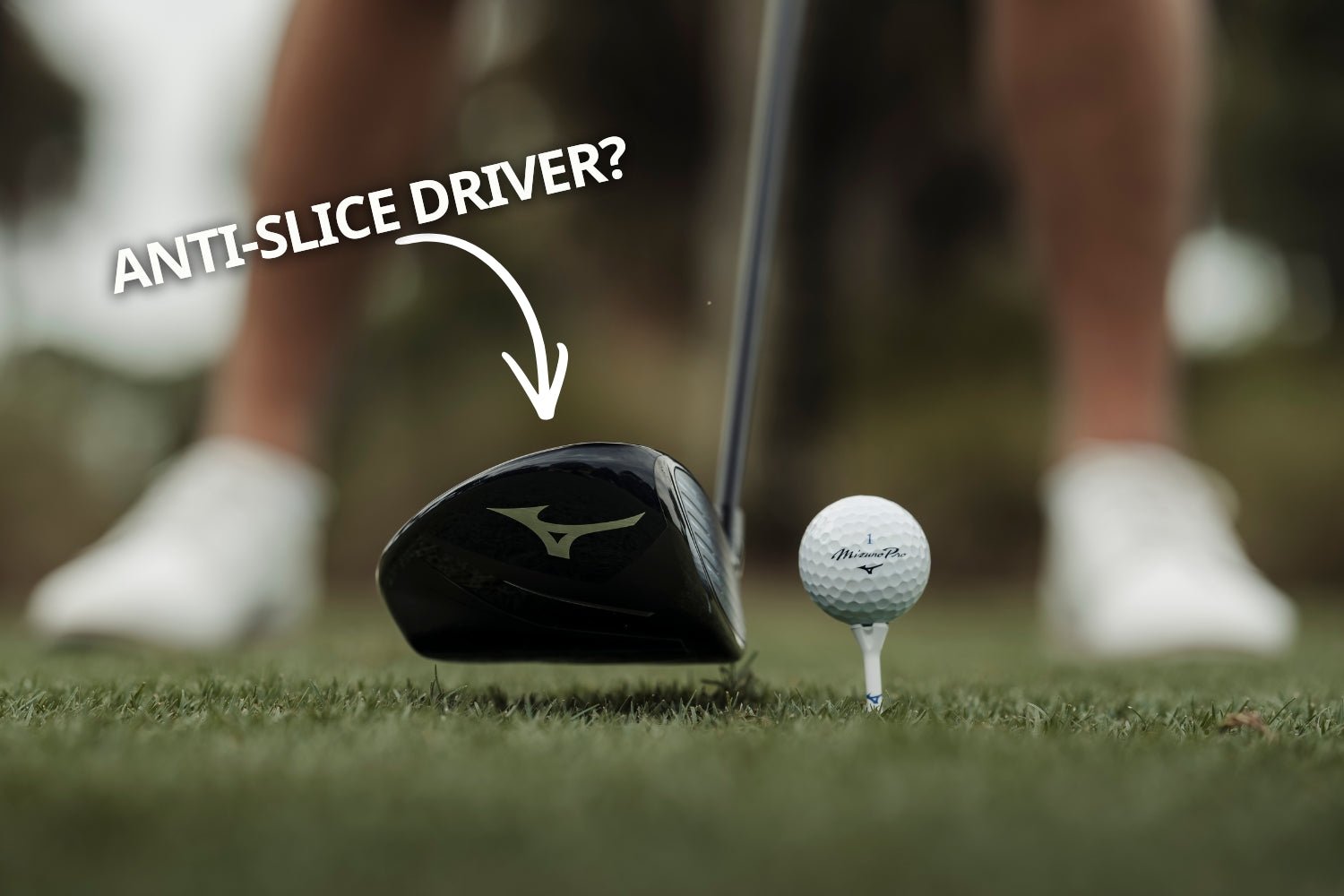
If you've ever watched your drive start left only to curve dramatically right into the trees (or the opposite for left-handers), you're not alone. The slice is the most common fault amongst amateur golfers, affecting an estimated 85% of improver golfers. But here's the thing – it's entirely fixable with the right knowledge, practice, and occasionally, the right equipment.
At Evolution Golf in Ringwood, we've helped hundreds of golfers conquer their slice through expert advice, custom fitting, and proven techniques. This guide breaks down exactly why you slice your driver and provides seven methods to fix it permanently. Whether you're a 24-handicapper or fighting to break into single figures, these techniques will help you find the fairway more often.

Why Do I Slice My Driver? Understanding the Root Cause
Before we get into fixes, you need to understand what actually causes a slice. Too many golfers try to fix symptoms without addressing the root cause, leading to frustration and inconsistent results.
The Physics of a Slice
A slice occurs when the golf ball spins dramatically from left to right (for right-handed golfers), causing it to curve significantly off your intended target line. This happens due to two primary factors:
1. Clubface orientation at impact: If your clubface is open (pointing right of your swing path) at impact, it will impart sidespin on the ball.
2. Swing path direction: An out-to-in swing path (cutting across the ball) exacerbates the slice, adding even more left-to-right spin.
The combination of these factors creates what's known as a "double-cross" slice – the most severe and frustrating type. The ball starts left of your target and then curves dramatically right, often losing significant distance in the process.
Research from TrackMan shows that the average slicer loses 20-30 yards compared to a straight shot due to the inefficient energy transfer and excessive spin. That's the difference between being in the fairway or hunting for your ball in the rough.
Common Swing Faults That Cause Slicing
Understanding the specific fault in your swing is essential for implementing the right fix. Here are the most common culprits:
- Weak grip: Hands rotated too far to the left on the club (for right-handers)
- Open clubface at address: Starting with the face already pointing right
- Poor alignment: Body aimed left, causing an over-the-top move
- Incorrect ball position: Ball too far forward promotes an open face at impact
- Early extension: Standing up through impact, throwing the club outside
- Casting or early release: Releasing the club too early in the downswing
- Tension: Tight grip and rigid arms preventing natural release
All of these faults can be corrected with focused practice and the right drills.
7 Proven Ways to Fix Your Driver Slice
Right, let's get into the specific techniques that will transform your driver performance. Work on these in order – each builds upon the previous fix.
1. Perfect Your Grip
Your grip is your only connection to the golf club, making it the foundation of every swing. A weak grip is one of the primary causes of a slice, as it makes it nearly impossible to square the clubface at impact.
The Fix: Adopt a stronger grip position
How to implement:
- Place your left hand (for right-handers) on the club so you can see 2-3 knuckles when you look down
- Ensure your left thumb sits slightly right of centre on the grip
- Position your right hand so the lifeline of your palm covers your left thumb
- Your right palm should face your target, with the "V" formed by your thumb and forefinger pointing toward your right shoulder
- Apply consistent pressure (about 5/10) – too tight causes tension, too loose causes loss of control
Practice tip: Hit 20 balls on the range with your new grip without worrying about where the ball goes. Focus solely on the feel of the stronger grip. You may initially hit pulls or hooks – this is normal and shows the grip is working.

2. Align Your Body Correctly
Poor alignment is like aiming at the wrong target. Many slicers unknowingly aim left to compensate for their ball flight, which actually encourages the out-to-in path that causes the slice.
The Fix: Square alignment parallel to your target line
How to implement:
- Pick a spot 2-3 feet in front of your ball on your target line
- Align your clubface directly at this intermediate target
- Set your feet, hips, and shoulders parallel to this line (like railway tracks)
- Check that your shoulders aren't open (pointing left) – this is the most common error
- Ensure your front foot isn't pulled back, which opens your hips
The mirror drill: Practice your setup at home in front of a full-length mirror. Place alignment sticks on the ground to verify your body is truly square, not just feeling square.
3. Fix Your Ball Position
Ball position dramatically affects the clubface angle at impact. Too far forward, and you'll catch the ball with an open face as your club arcs back inside.
The Fix: Position the ball correctly for your driver
How to implement:
- Place the ball opposite your left heel (for right-handers)
- Position it slightly higher on the tee – you want to hit the ball on the upswing
- Stand wider than shoulder-width with your weight favouring your right side at address
- Your head should be slightly behind the ball, allowing you to swing up and through
Consistent tee height is crucial for this fix. The Masters Bamboo Graduated Pink Tees – £3.99 feature graduated markings that ensure you tee the ball at the same height every time. Their reduced friction bamboo construction doesn't impede clubhead speed, whilst the 2 1/4" height is optimal for modern driver heads and upward angle of attack.
Pro tip: Tee your ball so approximately half the ball sits above the crown of your driver when at address. This promotes the slightly upward angle of attack that maximises distance and reduces slice spin.
4. Shallow Your Swing Path
This is perhaps the most critical fix for severe slicers. An out-to-in (over-the-top) path is the death knell for straight drives.
The Fix: Create an inside-to-out swing path
How to implement:
- At the top of your backswing, feel your right elbow drop down toward your right hip (for right-handers)
- Imagine swinging the club out toward "right field" rather than pulling it across your body
- Focus on keeping the club behind you longer in the downswing
- Your hands should pass closer to your right leg on the downswing
Visualisation technique: Picture a second golf ball 12 inches behind and 6 inches inside your actual ball. Make practice swings trying to brush this imaginary ball first. This promotes the in-to-out path needed to eliminate your slice.
Video analysis: Use your smartphone to record your swing from down-the-line. Compare your swing path to professional golfers on YouTube. This visual feedback is invaluable for understanding your current path.
5. Release the Club Properly
A proper release allows the clubface to square up naturally through impact. Many slicers hold off the release, keeping the face open.
The Fix: Allow your forearms to rotate through impact
How to implement:
- Through impact, feel your right forearm rotating over your left (for right-handers)
- Your right hand should turn from facing the sky to facing the ground post-impact
- Focus on rotating, not flipping – the rotation should be smooth and controlled
- Your right elbow should straighten naturally as you release
The basketball drill: Make practice swings as if you're throwing a basketball underhand to a target 20 yards away with your right hand. Notice how your forearm naturally rotates. Apply this same feeling to your golf swing.
6. Strengthen Your Impact Position
A strong impact position ensures maximum energy transfer and a square clubface at the moment of truth.
The Fix: Create the proper impact dynamics
How to implement:
- At impact, your hips should be open 45° to your target line
- Your chest should still face the ball
- Your hands should be ahead of the ball, shaft leaning forward
- Your weight should be 80% on your left side (for right-handers)
- Your left wrist should be flat or slightly bowed, not cupped
The impact bag drill: Hit an impact bag (or stack of old towels) to ingrain the proper impact position. Make slow-motion swings, pausing at impact to check your positions. This muscle memory will translate to full-speed swings.
7. Practice the Towel Drill
This drill addresses multiple slice-causing issues simultaneously and provides immediate feedback.
The Fix: The towel under the arms drill
How to implement:
- Place a small towel or headcover under your right armpit
- Make half-swings focusing on keeping the towel in place
- If the towel falls, you're disconnecting your arms from your body rotation
- Progress to three-quarter swings, then full swings
- Hit balls with the towel in place once you're comfortable
Why it works: This drill prevents the "chicken wing" move many slicers make, keeps your swing path more inside-to-out, and promotes better body rotation through impact.
Anti-Slice Drivers: Can Equipment Help?
Whilst technique is paramount, modern driver technology has made significant strides in helping golfers reduce slice spin. If you've worked on your swing but still struggle with a persistent slice, an anti-slice or draw-biased driver might be the missing piece.

Wilson Staff DYNAPWR Max+ Driver
The Wilson Staff DYNAPWR Max+ Driver – £299.99 is specifically engineered to combat the slice. Its ultra-high MOI (Moment of Inertia) design provides exceptional forgiveness on off-centre hits, whilst the draw-biased internal weighting actively promotes right-to-left ball flight.
Key slice-fighting features:
- Heel-weighted design that helps square the face at impact
- Expanded sweet spot that maintains ball speed on mishits
- Aerodynamic crown that increases clubhead speed through impact
- Adjustable hosel allowing up to 2° of loft and lie customisation
Who should consider it: Mid-to-high handicappers who consistently slice with standard drivers. The Max+ is particularly effective for golfers with swing speeds between 80-95mph who struggle to generate enough clubhead speed to square the face.
We've fitted dozens of customers into this driver at our Ringwood store, and the results have been remarkable. The average reduction in slice spin is 400-600 RPM, translating to 15-25 yards of extra fairway finding.

PXG Black Ops 0311 Ultra Lite Driver
The PXG Black Ops 0311 Ultra Lite Driver – £399.99 represents a different approach to fixing a slice – increasing clubhead speed. Many golfers slice because they can't generate enough speed to square the face at impact. This ultra-lightweight driver (under 280 grams total) helps you swing faster with less effort.
Key slice-fighting features:
- Extremely lightweight construction (40-45 gram shaft options)
- Optimised centre of gravity positioning for higher launch
- Adjustable weights allowing heel bias for draw preference
- PXG's Precision Weighting Technology for customised ball flight
Who should consider it: Golfers with slower swing speeds (under 90mph) who fight a slice due to timing issues. The lighter weight makes it easier to square the face and generate proper clubhead rotation through impact.
The Ultra Lite isn't just for seniors or slower swingers. We've seen numerous younger golfers with smooth tempos benefit from the lighter weight, as it promotes better rhythm and timing – both crucial for eliminating a slice.
Supporting Equipment That Helps
Beyond your driver, other equipment choices can support your anti-slice journey. Quality golf gloves ensure consistent grip pressure and feel. The adidas Mens LH Aditech Golf Glove – £11.95 provides excellent grip in all conditions, helping you maintain that stronger grip position we discussed earlier.
For practice sessions, alignment aids are invaluable. Whilst we don't stock dedicated alignment sticks, placing a club on the ground parallel to your target line during practice achieves the same result.
The Role of Custom Fitting in Fixing Your Slice
Even with perfect technique, playing the wrong driver specifications can make eliminating your slice nearly impossible. At Evolution Golf's Ringwood store, our custom fitting service uses launch monitor technology to identify the exact specifications that complement your swing.
Key fitting variables that affect slice:
Shaft flexibility: Too stiff, and you'll struggle to square the face; too flexible, and you'll lose control. Most slicers benefit from regular or senior flex shafts that allow easier face rotation.
Loft: Counter-intuitively, many slicers benefit from more loft (10.5° to 12°) rather than less. Higher loft reduces sidespin and gets the ball airborne more easily with slower swing speeds.
Shaft length: Standard 45.5-46" drivers are often too long for consistent contact. Choking down or fitting to 44-45" can dramatically improve strike quality and reduce slice tendency.
Shaft weight: Lighter shafts (50-60 grams) generally help slicers generate more speed and square the face more easily. Heavier shafts (70+ grams) can work for stronger, faster swingers who need more control.
Lie angle: An upright lie angle helps players who slice close the face at impact. Adjustable hosels make this easy to experiment with.
Our fitting process includes:
- Current swing analysis with TrackMan or similar technology
- Reviewing your typical miss patterns and dispersion
- Testing multiple head/shaft combinations
- Comparing launch conditions (spin rate, launch angle, ball speed)
- On-course validation to ensure improved performance translates
A proper driver fitting costs £50-75 at most facilities (often free with purchase), but can add 20-30 yards to your drives and reduce your average score by 2-4 strokes. For serious improver golfers, it's among the best investments you can make.
Visit our store in Ringwood or explore our range online at evolutiongolf.co.uk to schedule your custom driver fitting session. Our team will analyse your swing and recommend the optimal specifications to eliminate your slice.
Practice Drills to Stop Slicing Forever
Knowledge without practice is merely potential. These drills will ingrain the correct movements and make your anti-slice swing automatic.
The Alignment Stick Drill
This drill is brutally honest about your swing path – you'll get immediate feedback if you're swinging out-to-in.
Setup:
- Place one alignment stick in the ground at a 45° angle, 12 inches outside your ball, pointing toward your target
- Position it so your clubhead would hit the stick if you came over-the-top
- Make practice swings ensuring your club passes under the stick
- Progress to hitting balls, focusing on swinging from inside without hitting the stick
Frequency: Spend 10 minutes with this drill before every range session. Within 3-4 sessions, you'll notice a dramatic shift in your path.
The Headcover Impact Drill
This drill trains the proper inside-to-out path whilst preventing the dreaded over-the-top move.
Setup:
- Place a headcover 6 inches outside your golf ball, slightly forward
- Set up normally to the ball
- Make swings ensuring you don't hit the headcover on your downswing
- To avoid it, you must approach the ball from inside, not outside
Why it works: The headcover creates a physical barrier that forces you to shallow your downswing and approach from inside. After 50-100 repetitions, this path will become natural.
Progression: Start with practice swings, then hit balls off a tee. Once comfortable, progress to hitting balls off the ground (fairway woods) with the headcover in place.
Common Mistakes to Avoid When Fixing a Slice
Many golfers sabotage their progress by making these mistakes:
1. Expecting immediate results: Changing a fundamental swing pattern takes time. Expect 4-6 weeks of focused practice before seeing consistent improvement. Don't abandon a fix after one range session.
2. Trying to fix everything at once: Work on one element at a time. Master your grip before moving to alignment, then path, then release. Trying to change everything simultaneously leads to confusion and inconsistency.
3. Overcompensating with aim: Don't aim further left to account for your slice. This reinforces poor swing mechanics and makes the slice worse long-term.
4. Swinging harder: Many golfers think more speed will fix their slice. Actually, swinging at 80% allows better rhythm, timing, and face control. Once you're hitting straight shots at 80%, gradually increase speed.
5. Neglecting short game practice: Yes, fix your slice, but don't abandon your short game practice. A balanced practice routine maintains all aspects of your game whilst you work on your driver.
6. Buying equipment without fitting: The latest £600 driver won't fix your slice if it's the wrong specifications for your swing. Always get fitted or at least demo clubs extensively before purchasing.
7. Practising on the course: Your practice range is for experimentation and change. On the course, commit to your shot shape and manage around it until your new swing is grooved.
Frequently Asked Questions
How long does it take to fix a driver slice?
With focused practice, most golfers see noticeable improvement within 3-4 weeks. However, completely eliminating a slice and making a straight or draw ball flight automatic typically takes 2-3 months of consistent practice (2-3 range sessions per week). The timeline depends on:
- Severity of your current slice
- Quality and frequency of practice
- Whether you're working with a coach
- How ingrained your current swing pattern is
Remember, you're literally rewiring motor patterns that may have existed for years. Be patient and celebrate small improvements along the way.
Can I fix my slice without lessons?
Yes, it's possible with the right resources and dedication. This guide provides the knowledge you need. However, professional instruction accelerates the process significantly. A good coach can:
- Identify your specific swing faults quickly
- Provide immediate feedback on changes
- Prescribe the right drills for your particular issue
- Prevent you from developing compensations
Consider investing in even 2-3 lessons to diagnose your slice cause and verify you're implementing fixes correctly. The combination of professional guidance and self-directed practice is ideal.
Is a slice always caused by an open clubface?
Not always, though an open face is the most common cause. A slice can result from:
- Open clubface at impact (most common)
- Extremely out-to-in swing path, even with a square face
- Combination of slightly open face and out-to-in path (most severe)
- Poor strike location (heel hits promote slice)
TrackMan data shows that face angle accounts for approximately 75% of initial ball direction, whilst path contributes about 25%. However, path has more influence on the curve of the ball in flight. This is why addressing both face and path is essential for eliminating a slice.
Should I buy an anti-slice driver?
If you've worked on your swing mechanics for 6-8 weeks with limited improvement, an anti-slice driver can be beneficial. These drivers feature:
- Draw-biased weighting that helps close the face
- Higher MOI for more forgiveness on mishits
- Optimised CG location for reduced slice spin
However, equipment should complement technique improvement, not replace it. The ideal approach is to improve your swing whilst using equipment that supports your tendencies. Many golfers find that combining swing changes with the right driver eliminates their slice completely.
Consider a custom fitting to determine if an anti-slice driver would benefit your specific swing characteristics.
Will a stronger grip fix my slice?
A stronger grip is one of the most effective fixes for many slicers, but it's not a universal cure. A stronger grip:
- Makes it easier to square or close the face at impact
- Promotes more forearm rotation through the hitting zone
- Requires less timing or hand manipulation
However, if your slice is caused primarily by a severe out-to-in path, changing your grip alone won't solve it. You'll likely hit pulls or pull-hooks with a strong grip and an over-the-top path. The grip change must be combined with path improvements for optimal results.
Start with the grip, as it's the foundation, but be prepared to address multiple swing elements for complete slice elimination.
Take Action: Your Path to Straighter Drives
Fixing your slice isn't about finding one magic tip – it's about understanding the root cause in your swing and systematically addressing it through proper technique, focused practice, and occasionally, the right equipment.
Your action plan:
Week 1-2: Focus exclusively on grip and alignment. These fundamentals must be correct before anything else will work.
Week 3-4: Add ball position work and begin the alignment stick drill. Film your swing to verify path changes.
Week 5-6: Incorporate release and impact position drills. Start hitting balls with your new mechanics.
Week 7-8: Increase practice intensity. Play holes on the course with your new swing, managing around occasional slices.
Week 9+: Refine and groove. Consider equipment evaluation if still struggling after significant swing improvements.
Remember, even the best players occasionally miss right. The goal isn't perfection – it's consistency and understanding. When you know why you slice and have the tools to correct it, you can make on-course adjustments and recover quickly.
Visit Evolution Golf in Ringwood for expert advice and custom driver fitting. Our team has helped hundreds of golfers eliminate their slice through personalised fittings and expert recommendations. Whether you need a complete swing evaluation or simply want to try the latest anti-slice drivers like the Wilson Staff DYNAPWR Max+ Driver or PXG Black Ops 0311 Ultra Lite Driver, we're here to help.
Browse our selection of draw-biased and high-MOI drivers designed to fight your slice at evolutiongolf.co.uk, or visit our Ringwood store to schedule your custom driver fitting and discover the specifications that will transform your driving game.