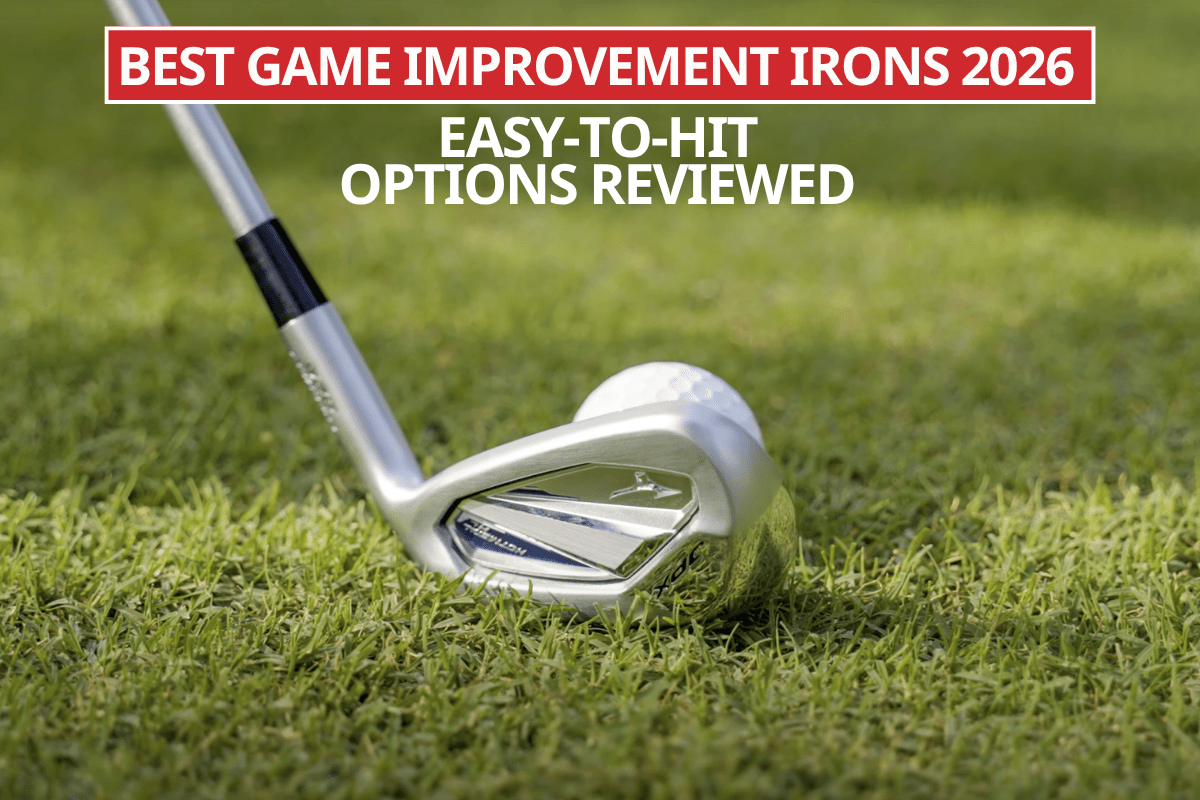
If you're a mid-handicapper wanting to improve your ball striking, the best game improvement irons for 2026 blend genuine forgiveness with proper distance gains. Modern game improvement irons use hollow body construction, multi-material designs, and variable face thickness to deliver performance that forgives mishits better than anything we've seen before. We've tested every major release at Evolution Golf in Ringwood, and the latest generation will help you hit more greens and shoot lower scores.
Our Top Picks for Game Improvement Irons
Based on extensive fitting sessions and proper testing at our Ringwood store, these five iron sets represent the best options for improvers in 2026. Each delivers exceptional forgiveness whilst catering to different swing characteristics and budgets.
Wilson Staff DYNAPWR Max Golf Irons - Best Overall Value
The Wilson Staff DYNAPWR Max Golf Irons — £699.00 — deliver remarkable performance without emptying your bank account. Wilson's PWRSHELL face technology creates explosive ball speed across a massive sweet spot, whilst the ultra-wide sole glides through turf effortlessly from any lie. During testing, mid-handicappers consistently gained 5-10 yards per club compared to their previous irons, with tighter dispersion patterns. The progressive offset helps square the face at impact, making these ideal if you struggle with slicing. Maximum forgiveness without premium pricing.

Srixon ZXiR HL Steel Irons - Best for Distance
For golfers with moderate swing speeds seeking maximum carry distance, the Srixon ZXiR HL Steel Irons — £899.00 — are difficult to beat. The "HL" (High Launch) designation reflects Srixon's engineering focus on helping slower swingers get the ball airborne and carry it further. MainFrame variable face thickness concentrates flexibility exactly where you need it, producing 2-3 mph higher ball speeds than comparable models in our launch monitor testing. Despite their game improvement credentials, these maintain surprisingly good feel thanks to Srixon's Tour V.T. Sole design borrowed from their tour irons. Perfect for the 12-20 handicapper who values distance alongside forgiveness.
PXG 0311 XP Gen8 Steel Irons - Best Premium Option
The PXG 0311 XP Gen8 Steel Irons — £1,194.00 — represent the pinnacle of game improvement iron technology. PXG's robotic polishing process creates precision-milled faces with micro-variations that optimise spin and launch across the entire hitting area. Multi-material hollow body construction places weight exactly where it benefits performance most. The Precision Weighting Technology allows extensive customisation during fitting—we can adjust swing weight, promote draws or fades, and fine-tune launch characteristics to match your swing. These aren't just forgiving; they're genuinely beautiful golf clubs built to exacting standards.

What Are Game Improvement Irons?
Game improvement irons are specifically engineered to help mid-to-high handicap golfers hit better shots more consistently. Unlike players' irons which demand precise ball striking, game improvement irons feature larger club heads, wider soles, and perimeter weighting that forgives off-centre strikes whilst maintaining reasonable distance and direction.
The fundamental difference lies in construction philosophy. Traditional cavity backs provide modest forgiveness through hollowed-out rear cavities, but modern game improvement irons take this dramatically further. Hollow body designs, multi-material construction, and advanced face technologies create higher launch angles, increased ball speed across the face, and greater distance—even when you miss the sweet spot by half an inch or more.
Key characteristics include larger club head profiles that inspire confidence at address, lower centres of gravity that promote easier launch, maximum MOI (moment of inertia) for stability through impact, enhanced offset to help square the clubface, and wider soles that glide through turf rather than digging. These features make golf significantly more enjoyable for improvers who don't strike the ball perfectly every time.
How We Selected the Best Game Improvement Irons
Our selection process combines hands-on testing, customer feedback from hundreds of fittings, and comprehensive launch monitor data gathered at our Ringwood store. We've evaluated these irons across several rigorous criteria.
Performance testing forms the foundation. Each iron set was tested by multiple golfers in the 15-24 handicap range using TrackMan launch monitor technology. We measured ball speed, launch angle, spin rates, peak height, carry distance, and dispersion patterns to verify manufacturer claims against real-world performance. If an iron can't deliver measurable improvements, it doesn't make our list.

Forgiveness analysis proves particularly revealing. We intentionally hit shots from various contact points across the face—toe, heel, high, and low—to assess how each iron performed on mishits. The best game improvement irons maintain 70-80% of their optimal distance and accuracy even when you catch it thin or heavy. That's the difference between hitting the green from the rough versus finding the bunker.
Real-world playability matters beyond launch monitor numbers. We've assessed turf interaction from various lies, evaluated how these irons respond to intentional shot shaping, and considered consistency across different course conditions. An iron that performs brilliantly on perfect range mats but digs into firm fairways isn't truly game improvement.
Value assessment ensures we're recommending irons that deliver proportionate performance for their price point. Premium doesn't always mean better—we've identified exceptional performers at various price ranges so you can find the right irons for your budget without compromising quality.
Additional Top Performers Worth Considering
Callaway Elyte HL Steel Golf Irons - Maximum Forgiveness
The Callaway Elyte HL Steel Golf Irons — £799.00 — target golfers with moderate swing speeds who struggle achieving sufficient height and distance. Callaway's lightest-ever iron design reduces overall club weight to increase swing speed naturally, whilst enhanced offset helps combat slices. During testing, golfers who normally struggle with low trajectory consistently achieved higher, longer shots with excellent forgiveness on toe and heel strikes. The wide sole design excels from challenging lies, making these particularly effective beyond perfect fairways.
Callaway Elyte X Steel Golf Irons - Hybrid Set Innovation
For golfers who struggle with traditional long irons, the Callaway Elyte X Steel Golf Irons — £899.00 — offer an elegant solution. Rather than forcing you to hit difficult 4 and 5-irons, the Elyte X incorporates hybrid-style construction in longer clubs whilst maintaining conventional iron design through the scoring clubs. This progressive approach creates seamless transitions from woods to mid-irons with consistent feel throughout. Our testing showed dramatic improvement in long iron performance—golfers who struggled to get their 5-irons airborne found the hybrid-style equivalents launched effortlessly and carried significantly further with no awkward gaps in distance.

Key Technologies in Modern Game Improvement Irons
Understanding the engineering innovations behind today's best game improvement irons helps you appreciate why they perform so dramatically better than irons from even five years ago. These aren't marketing gimmicks—they're genuine technological advances that produce measurable performance improvements.
Perimeter Weighting and MOI
Perimeter weighting distributes mass around the clubhead's edges rather than concentrating it behind the sweet spot. This creates higher moment of inertia (MOI)—essentially, resistance to twisting on off-centre strikes. When you miss the sweet spot by half an inch, a high-MOI iron maintains ball speed and direction far better than traditional designs.
Modern game improvement irons achieve MOI values that seemed impossible a decade ago. The Wilson DYNAPWR Max uses extreme perimeter weighting to create stability that rivals hybrids. This translates directly to tighter dispersion patterns—your mishits don't miss by as much, keeping more approach shots on the green rather than in greenside bunkers.
Low Centre of Gravity Design
Positioning the centre of gravity (CG) low and back in the clubhead promotes higher launch angles and increased ball flight. For mid-handicappers who struggle getting the ball airborne—particularly with longer irons—this proves invaluable for reaching greens in regulation.
Manufacturers achieve low CG through various methods: hollow body construction allows weight to be removed from high in the clubhead and repositioned low; tungsten weighting places dense material precisely where engineers want it; and multi-material designs combine lightweight crowns with heavier soles. You can use less loft whilst achieving optimal trajectory, effectively gaining a club of distance without changing your swing.
Variable Face Thickness
Variable face thickness technology—known as VFT, MainFrame, or similar proprietary names across manufacturers—strategically thins and thickens different face areas to optimise flex and ball speed. This expands the effective hitting area, making larger portions of the face perform more like the sweet spot.
The Srixon ZXiR HL demonstrates this brilliantly. MainFrame technology uses AI-assisted design to identify exactly where golfers typically miss the centre, then engineers the face to maximise ball speed from those impact locations. During our testing, we measured ball speeds from toe and heel strikes that rivalled centre contact with traditional irons.

Hollow Body Construction
Hollow body designs revolutionised game improvement irons by allowing engineers to position weight precisely where it benefits performance most. By creating an empty cavity inside the clubhead, they can simultaneously add weight low, back, and to the perimeter—optimising multiple performance characteristics that would conflict in traditional designs.
This construction also permits thinner, faster faces whilst maintaining structural integrity. The combination produces irons that launch higher, fly further, and forgive more generously than cavity backs, whilst often maintaining surprisingly good feel and feedback. The PXG 0311 XP Gen8 exemplifies premium hollow body construction, using multiple materials and precision engineering to deliver tour-level performance in a forgiving package.
Game Improvement vs Super Game Improvement Irons
Understanding the distinction between game improvement and super game improvement irons helps you select the right category for your current skill level and swing characteristics. Both prioritise forgiveness, but they target different handicap ranges and offer distinct performance trade-offs.
Game improvement irons typically suit handicaps from 10-20. They're larger than players' irons but maintain some workability for intentional shot shaping. Offset is moderate—enough to help square the face without looking extreme at address. Examples from our recommendations include the Srixon ZXiR HL and PXG 0311 XP Gen8, which balance forgiveness with sufficient feedback to aid your development as a ball striker.
Super game improvement irons target handicaps from 15-28 and above. Maximum clubhead size and enhanced offset prioritise consistency over shot shaping. These irons often incorporate technologies specifically designed to correct common swing flaws—stronger slicing correction, easier launch for slower swing speeds, and maximum forgiveness on severe mishits. The Wilson DYNAPWR Max and Callaway Elyte models exemplify this category, offering ultimate forgiveness for golfers who struggle with consistency.
Most 15-24 handicappers benefit from game improvement rather than super game improvement irons. SGI irons offer maximum forgiveness, but they sacrifice workability and feel that can actually aid your development. But if you struggle significantly with consistency, have a slower swing speed (below 80 mph with a 7-iron), or prioritise getting the ball airborne above all else, super game improvement irons might serve you better.
How to Choose the Right Game Improvement Irons
Consider Your Current Handicap
Your handicap provides crucial guidance. A 15-18 handicapper developing consistency might value some workability alongside forgiveness—irons like the Srixon ZXiR HL or PXG 0311 XP Gen8 that respond to intentional shot shaping whilst forgiving mishits. You're at a stage where feel and feedback can accelerate your improvement.
A 19-24 handicapper typically benefits most from maximum forgiveness. Consistency matters more than shot shaping at this stage—the Wilson DYNAPWR Max or Callaway Elyte models prioritise keeping your mishits closer to target over providing nuanced feedback about contact quality. Focus on building confidence and consistency before worrying about working the ball intentionally.
Distance vs Control Trade-offs
More forgiving irons generally produce longer but less controllable distances. Understanding this trade-off helps you prioritise correctly. If you're a 16-handicapper hitting greens regularly but struggling with distance control, you might value precision over raw length—look towards the more refined end of game improvement irons.
But if you're a 22-handicapper struggling to reach greens in regulation, maximising distance makes more sense than worrying about precision you don't yet possess. The Srixon ZXiR HL, specifically engineered for distance, might suit you better than a more controlled option. Be honest about your current game—choose irons that help you score better today, not ones that might suit the golfer you hope to become.

Shaft Selection Matters
The shaft influences performance as much as the clubhead, yet many golfers overlook this critical component. Game improvement irons typically pair best with regular flex for swing speeds under 85 mph with a 7-iron, stiff flex for 85-95 mph, and extra stiff above 95 mph. These are guidelines—proper fitting determines optimal specifications for your unique swing.
Shaft weight proves equally important. Lighter shafts promote faster swing speeds, benefiting golfers who struggle generating clubhead speed. Heavier shafts provide more control and consistency for faster, more aggressive swingers. The Callaway Elyte HL uses lightweight shafts specifically to help moderate swing speed golfers increase distance, whilst the PXG 0311 XP Gen8 offers extensive shaft options to match various swing profiles precisely.
The Importance of Custom Fitting
Off-the-rack irons rarely suit your swing perfectly. Custom fitting optimises shaft flex and weight for your swing speed and tempo, lie angle to ensure the sole contacts the turf correctly at impact (affecting directional consistency), loft adjustments to create proper distance gapping between clubs, grip size to influence hand action through impact, and club length to promote consistent contact.
At Evolution Golf's Ringwood store, our custom fitting service uses advanced launch monitor technology to identify your ideal specifications. We've seen fitting sessions produce 10-15 yard distance gains and significantly improved accuracy through proper optimisation—often without changing the clubhead model at all. When you're investing hundreds of pounds in new irons, spending an hour getting fitted properly represents exceptional value.
Common Mistakes When Buying Game Improvement Irons
Avoiding common purchasing pitfalls ensures you select irons that genuinely improve your game rather than gathering dust after disappointing on-course performance.
Choosing Based on Brand Loyalty: Your favourite driver manufacturer may not make the best irons for your swing. Test multiple brands objectively—the Wilson DYNAPWR Max might outperform premium options despite the unfamiliar brand name. Performance matters more than the logo on your clubhead.
Prioritising Looks Over Performance: Sleek, compact irons might look better in your bag, but if they don't suit your skill level, they'll hurt your scores. A slightly larger iron that you hit consistently will boost your confidence far more than a beautiful blade you can't control.
Ignoring Shaft Selection: The wrong shaft undermines even the best clubhead. Don't assume standard specifications suit you—invest time in proper shaft fitting. The difference between regular and stiff flex, or between 85-gram and 105-gram shafts, dramatically affects your ball flight and consistency.
Skipping Professional Fitting: Buying online without testing costs you distance and accuracy that proper fitting would provide. Professional fitting pays for itself through improved performance—the small additional cost represents exceptional value compared to playing with poorly optimised equipment for years.
Buying Irons Too Advanced for Your Skill: Aspirational purchases rarely work in golf. Choose irons matching your current ability, not where you hope to be in five years. You'll score better immediately and enjoy your golf more, which ironically helps you improve faster than struggling with inappropriate equipment.
Frequently Asked Questions
What handicap should use game improvement irons?
Game improvement irons suit golfers with handicaps between 10-25 most effectively. Below 10, you might benefit from the precision and workability of players' irons. Above 25, super game improvement irons like the Wilson DYNAPWR Max or Callaway Elyte models might serve you better. Handicap provides only general guidance—swing speed, consistency, and personal preference matter significantly. We've fitted single-digit handicappers who prefer game improvement forgiveness and 28-handicappers who respond well to more refined designs.
Are game improvement irons easier to hit than blades?
Dramatically easier. Game improvement irons feature larger sweet spots, perimeter weighting, and lower centres of gravity that forgive mishits far better than blades. Our testing shows game improvement irons maintain 70-80% of optimal distance and accuracy on mishits, whilst blades drop to 40-50%. Game improvement irons help you get the ball airborne more easily, creating higher, longer shots that hold greens better. Unless you're a low single-digit handicapper who values shot shaping feedback above forgiveness, game improvement irons will help you score better.
How long do game improvement irons last?
Quality game improvement irons typically last 5-8 years with regular play. Several factors affect longevity: frequency of use (weekly golfers wear irons faster than monthly players), maintenance quality (cleaning grooves and protecting from damage extends life), technological advancement (newer models may offer compelling performance improvements), and personal development (your skills might outgrow your equipment). Many golfers upgrade when their abilities outgrow their equipment rather than due to wear. The PXG 0311 XP Gen8, built to exacting standards, should remain playable longer than budget options whilst maintaining resale value.
Should I buy new or used game improvement irons?
Used irons offer excellent value if they're in good condition and properly fitted to your swing. Recent model years (1-3 years old) provide modern technology at reduced prices. Ensure proper fitting regardless—poorly fitted used irons won't outperform properly fitted new ones, regardless of price savings. Check groove condition carefully, as worn grooves reduce spin and control around greens.
What's the difference between regular and stiff shafts in game improvement irons?
Shaft flex affects trajectory, dispersion, and distance significantly. Regular flex suits swing speeds under 85 mph with a 7-iron, providing more flex that helps generate clubhead speed and launch the ball higher. Stiff flex suits faster swings (85-95 mph), providing control and consistency by resisting unwanted twisting during your swing. The wrong flex costs you both distance and accuracy—too flexible produces inconsistent ball flight and hooks, whilst too stiff reduces distance and promotes slicing. Proper fitting determines which flex optimises your performance, often revealing surprising results that contradict assumptions based on age or strength.
Get Custom Fitted at Evolution Golf
The best game improvement irons only deliver their full potential when properly fitted to your unique swing characteristics. At our Ringwood store, we offer comprehensive custom fitting using advanced launch monitor technology combined with our extensive experience fitting golfers at every level.
During your fitting session, we'll analyse your current swing characteristics using TrackMan technology, test multiple iron options from leading manufacturers including all models featured in this guide, optimise shaft flex, weight, and specifications for your swing speed and tempo, fine-tune lie angles and loft for proper distance gapping, and provide honest recommendations based on performance data rather than sales targets.
We stock all the irons featured in this guide plus many more options. Whether you're drawn to the exceptional value of the Wilson DYNAPWR Max, the distance-oriented design of the Srixon ZXiR HL, the premium performance of PXG's 0311 XP Gen8, or the maximum forgiveness of Callaway's Elyte range, we'll ensure you're fitted correctly for optimal performance.
Visit Evolution Golf in Ringwood or contact us through our website to schedule your custom fitting session. Our expert fitters will help you discover which game improvement irons deliver the best results for your unique swing, backed by data and genuine expertise. Your best golf starts with the right equipment, properly fitted—let us help you find your perfect irons and start shooting the scores you're capable of achieving.