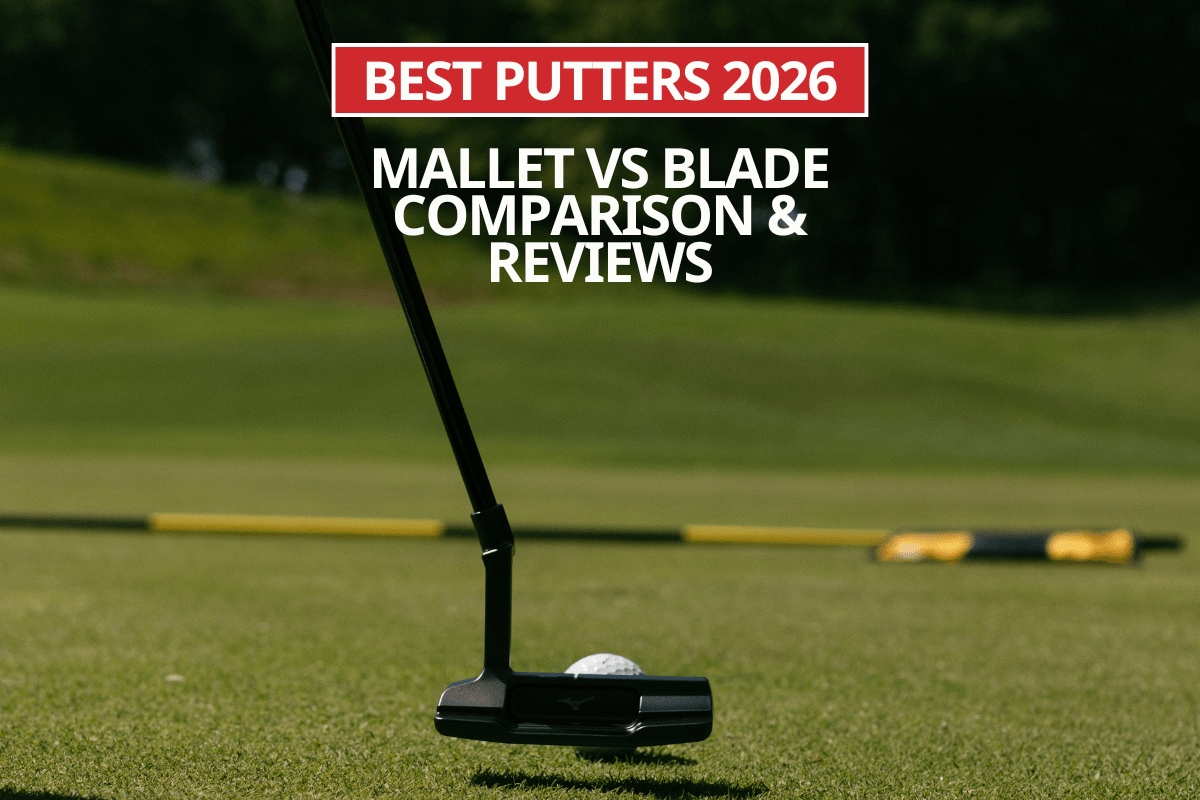
The right putter transforms your short game from frustrating to formidable. With putting accounting for roughly 40% of strokes in a typical round, choosing one of the best putters available can deliver the quickest scoring improvements in your game. Whether you're just starting out and chasing consistency, or you're a low handicapper hunting for that elusive extra edge on the greens, understanding what separates exceptional putters from mediocre ones helps you make smarter equipment decisions.
We've examined the best putters for 2026, comparing mallet vs blade designs, exploring premium Scotty Cameron alternatives, and revealing which features genuinely matter versus marketing hype. You'll find expert recommendations across multiple price points, learn how custom fitting amplifies performance, and understand which putter characteristics suit your unique stroke pattern.
Our Top Picks for Best Putters in 2026
After extensive testing and analysis, these five putters represent the finest options available across different playing styles and budgets. Each one delivers exceptional performance whilst addressing specific player needs.

PXG Allan Putter — £299.00
The PXG Allan brings genuinely game-changing technology to the green without the boutique price tag. Built around PXG's Zero Torque Balance Technology, its innovative S-hosel keeps the face naturally square to the path throughout your stroke — no hand manipulation required. The hollow 303 stainless steel and aluminium body features an ultra-thin face backed by S-COR polymer for a soft, muted feel, while adjustable sole weights let you dial in your preferred swing weight. Suitable for all abilities, it's an exceptionally forgiving putter for anyone who struggles with face rotation and consistency.

Evnroll ERZ ZERO Black Gravity Balanced Mallet Golf Putter — £349.00
Revolutionary Sweet Face Technology makes the Evnroll ERZ ZERO one of 2026's most technologically advanced putters. Parabolic grooves with variable widths across the face deliver more consistent ball speeds on mishits than conventional milled faces—independent testing confirms this isn't marketing hyperbole. The gravity-balanced design promotes straight-back-straight-through strokes whilst minimising torque on off-centre contact. If you struggle with distance control when missing the sweet spot, this technology genuinely transforms performance.

Wilson Infinite Windy City Golf Putter — £119.00
Outstanding value defines the Wilson Infinite Windy City, which incorporates features typically found in putters costing three times more. The high-contrast alignment system with multiple reference lines accommodates different visual preferences, whilst counter-balanced weighting promotes smooth, controlled tempo. For beginners, this addresses the two biggest challenges: alignment accuracy and strike consistency. The dark anti-glare finish enhances focus, making this an exceptional choice for high-handicappers or budget-conscious players who won't compromise on essential performance.
Understanding Putter Types: Mallet vs Blade
The mallet vs blade putter debate dominates equipment discussions, yet neither design proves universally superior. Understanding fundamental differences between these putter categories helps match characteristics to your stroke pattern and visual preferences.
What is a Blade Putter?
Blade putters represent traditional putter design that's dominated golf for over a century. These putters feature thin, flat clubheads with minimal offset—hence the "blade" designation. Classic examples include the Ping Anser and various Scotty Cameron Newport models that countless tour professionals have trusted for decades.
Key blade putter characteristics include compact head shapes with toe-hang weighting that suits arcing putting strokes, superior feedback through impact for experienced players, cleaner aesthetics preferred by traditionalists, and lighter overall weight for players prioritising feel over forgiveness. Blade putters reward consistent, repeatable strokes. When you strike the ball on the sweet spot, feedback and feel prove exceptional. Off-centre strikes, though? You'll lose distance and direction more dramatically than with mallet designs.
What is a Mallet Putter?
Mallet putters feature larger, deeper clubheads with weight distributed around the perimeter. This design philosophy emerged in the 1990s and has evolved dramatically with modern materials and engineering capabilities. Today's mallets range from modest semi-mallet shapes to futuristic designs resembling spacecraft more than traditional golf clubs.
Defining mallet features include larger clubheads with increased moment of inertia (MOI), perimeter weighting that resists twisting on mishits, enhanced alignment aids including lines, dots, and visual cues, face-balanced weighting ideal for straight-back-straight-through strokes, and greater forgiveness on off-centre contact. The best mallets excel at maintaining consistent ball speed across the face. If you tend to miss the sweet spot by a few millimetres—and most golfers do—a mallet helps preserve distance control that blade putters simply can't match.

Which Putter Type Should You Choose?
Your ideal putter type depends on three primary factors: stroke path, consistency level, and visual preferences.
Stroke Path: Players with arcing strokes (the putter head moves inside-to-inside like a pendulum) typically benefit from blade or toe-hang mallets. Those with straight-back-straight-through strokes should consider face-balanced mallets. To check your natural stroke, try putting with your eyes closed—where the putter naturally moves reveals your answer.
Consistency Level: Beginners and high-handicappers generally benefit from mallet forgiveness. Experienced players who consistently find the sweet spot may prefer the enhanced feedback of blades. The PXG Allan Putter exemplifies how modern mallets deliver exceptional forgiveness at accessible prices.
Visual Preferences: Some players simply cannot align mallet putters properly, whilst others find blades too minimalist for confident setup. Trust what looks right to your eye at address. Confidence matters enormously in putting performance.
What Makes the Best Putters in 2026?
The best putters combine proven design principles with modern technology that delivers measurable performance benefits. Understanding what separates premium putters from bargain options helps you invest wisely.
Technology Advances in Modern Putters
Putter technology has advanced significantly in recent years, with innovations that genuinely improve performance rather than merely generating marketing buzz.
Face Insert Technology: Premium putters now feature multi-material inserts engineered for specific performance characteristics. The Odyssey Ai-Dual #7 DB Putter (£329.00) employs artificial intelligence to design face inserts optimised for ball speed consistency—testing confirms it delivers more uniform results on mishits than previous Odyssey inserts. Evnroll's parabolic groove technology represents the cutting edge of controlled roll engineering.
Precision Milling: Computer-controlled milling creates perfectly flat faces and precise groove patterns. This manufacturing precision, once exclusive to putters costing £300+, now appears in mid-priced options like the Mizuno M.Craft Osaka S Golf Putter (£259.00).
Weight Distribution: Adjustable weights, strategic mass placement, and gravity-balanced designs help players achieve optimal stroke mechanics without extensive practice. The Evnroll ERZ ZERO's gravity-balanced engineering exemplifies how thoughtful weight distribution transforms stroke consistency.
Alignment Systems: From simple sight lines to elaborate 3D alignment features, modern putters make accurate aiming easier—crucial when even 2-3 degrees of misalignment means missing makeable putts.

Key Features to Consider
When evaluating the best putters, prioritise these characteristics that genuinely influence performance:
MOI (Moment of Inertia): Higher MOI means more forgiveness on off-centre hits. Look for specifications above 4000 g·cm² for maximum mishit protection. Mallet designs typically excel here.
Face Technology: Grooves, inserts, and face patterns influence roll quality. The best faces produce forward roll quickly, minimising skidding. The PXG Allan's pyramid face pattern genuinely improves roll quality compared to standard milled faces.
Weight and Balance: Match to your stroke tempo. Heavier putters (350g+) suit faster tempos, whilst lighter options work for slower, smoother strokes. Counter-balanced designs like those in the Wilson Infinite range help many players develop smoother rhythm.
Length: Standard putters measure 33-35 inches, but proper fitting often reveals you need something different. Most golfers use putters that are too long.
Grip Style: From traditional pistol grips to oversized SuperStroke options, grip selection dramatically affects feel and control. This often-overlooked component deserves careful consideration.
How Much Should You Spend on a Putter?
Putter prices range from around £100 to over £500. Different price points typically deliver:
£100–£200: Quality materials, reliable feel, and proven designs that suit golfers at every level. The Wilson Infinite Windy City at £119.00 exemplifies strong value in this bracket — well-built and ready to perform straight out of the box.
£200–£300: The sweet spot for most players. Expect premium construction, effective alignment aids, and tour-influenced face technology. The Mizuno M.Craft Osaka S at £259.00 occupies this ideal middle ground — forged in Japan from carbon steel, with adjustable weighting and Mizuno's legendary soft feel.
£300–£400: Advanced face technology, innovative design, and meticulous manufacturing. The PXG Allan (£299.00) and Odyssey Ai-Dual Square to Square Jailbird (£299.00) represent excellent choices here, delivering tour-level performance without extreme premiums.
£400+: Boutique brands, exotic materials, and tour-level precision. Justified for elite players and collectors, but most golfers won't perceive the performance difference over options in the £250-350 range.
The best putter for you balances performance needs with budget reality. A £150 putter that suits your stroke beats a £450 putter that doesn't. Every time.
Best Scotty Cameron Alternatives
Scotty Cameron putters command premium prices, often £350-500 for standard models. Whilst undeniably high-quality, several alternatives deliver comparable performance at significantly lower cost.
Why Look for Alternatives?
Scotty Cameron built their reputation on exceptional milling precision, premium materials, and tour-level quality control. Modern manufacturing has democratised these features though. CNC milling that once required Scotty's California workshop now appears in putters at every price point.
The Scotty premium largely reflects brand cachet, tour visibility, and resale value—legitimate considerations, but not necessarily performance advantages. In blind testing, most golfers cannot distinguish quality alternatives from Scotty putters in terms of feel or performance. The primary difference often reduces to the logo and price tag.
Top Value Options That Perform
Among the best putters we've reviewed, these Scotty Cameron alternatives deliver exceptional value whilst matching or exceeding performance in key areas:
PXG Allan Putter (£299.00): Matches Scotty's milling precision and material quality whilst costing £100-200 less than comparable Scotty models. The pyramid face pattern actually innovates beyond Scotty's standard milling, delivering measurably better roll consistency. The soft 303 stainless steel construction provides feedback that rivals anything in the premium putter market.
Mizuno M.Craft Osaka S (£259.00): Mizuno's legendary craftsmanship reputation rivals anyone in golf. The soft 1025 carbon steel feel competes directly with Scotty's premium models—tour players who aren't contractually obligated to use Scotty sometimes choose M.Craft instead. The precision CNC milling ensures perfect face flatness, whilst Mizuno's renowned quality control guarantees consistency across production runs.
Both alternatives deliver the premium feel, precise manufacturing, and performance characteristics that justify Scotty Cameron's reputation—without the extreme price premium. For value-conscious players who appreciate quality but question paying for brand cachet, these represent intelligent choices.

Putter Fitting: Why It Matters
Even the best putters perform poorly if they don't fit your specifications correctly. Putter fitting addresses length, lie angle, loft, and weight—variables that dramatically affect stroke consistency and results on the greens.
Custom Fitting at Evolution Golf Ringwood
At our Ringwood store, we offer comprehensive putter fitting that analyses your natural stroke characteristics and matches you with optimal specifications. Our fitting process includes stroke path analysis using video technology, impact location tracking to identify your tendencies, length optimisation for your height and posture, lie angle adjustment to ensure the sole sits flat at address, and weight customisation to match your tempo preferences.
A proper fitting typically adds 0-3 putts saved per round—equivalent to 1-3 strokes improvement without changing your technique. That represents remarkable value that pays dividends every round you play.
Key Fitting Considerations
Length: Most golfers use putters that are too long. Standard 35" putters suit players around 6'1" or taller. If you're average height (5'9"-5'10"), you likely need 33-34 inches. Too-long putters force you to stand farther from the ball and create inconsistent strike patterns that undermine even the best putter technology.
Lie Angle: The putter should sit flat on the ground when you assume your natural setup position. If the toe points up, you'll tend to pull putts. If the heel rises, you'll push them. Adjustments of just 2-3 degrees can transform your accuracy—this simple specification correction often produces dramatic improvements.
Loft: Most putters come with 3-4 degrees of loft, but individual needs vary based on your stroke. Players who forward-press or have a descending strike may need 1-2 degrees. Those who release the putter early might need 5-6 degrees to achieve optimal launch conditions.
Grip Size: Oversized grips reduce wrist action (beneficial for players prone to yips), whilst standard grips provide more feel and touch. There's no universal "best"—only what works for your stroke and preferences.
Common Putting Mistakes and How Your Putter Can Help
Even the best putters cannot fix fundamental stroke flaws. But choosing the right putter absolutely helps you avoid common mistakes that plague golfers at every skill level.
Mistake: Inconsistent Distance Control
Solution: High-MOI mallets like the Evnroll ERZ ZERO maintain ball speed across the face. If you struggle with three-putts because your distance control varies wildly, face technology matters more than you might think. The Sweet Face Technology genuinely delivers more consistent results on mishits.
Mistake: Poor Alignment
Solution: Clear alignment aids help tremendously. The Wilson Infinite Windy City excels here—multiple alignment options let you find what works for your eye. Some players align better with single lines, others with multiple references, and some prefer dots or shapes.
Mistake: Inconsistent Tempo
Solution: Heavier putters naturally smooth out jerky strokes. If you struggle with tempo, try counter-balanced designs or add weight to your current putter. The Wilson Infinite's counter-balancing helps many players develop smoother, more rhythmic strokes.
Mistake: Lack of Confidence
Solution: Use a putter you love looking at. Confidence is half the battle in putting—if a particular putter inspires belief when you address the ball, that psychological edge translates to better results. Never underestimate the power of confidence on the greens.
Your putter won't make you a great putter on its own. But the wrong putter definitely makes you a worse putter than you should be. Choosing equipment that complements your natural tendencies rather than fighting against them represents intelligent equipment management.
Frequently Asked Questions About Choosing the Best Putters
Should I choose a mallet or blade putter?
Choose a mallet if you have a straight-back-straight-through stroke or struggle with consistency on off-centre hits. Choose a blade if you have an arcing stroke and prioritise feel over forgiveness. When uncertain, test both styles with actual putts on real greens—the right answer is whichever improves your make percentage and inspires confidence.
What's the best putter for a high handicapper?
High handicappers benefit most from high-MOI mallets with clear alignment aids. The Wilson Infinite Windy City offers exceptional value at £119.00 for those who prefer a classic blade style, whilst the Odyssey Ai-Dual Square to Square Jailbird provides premium mallet performance and maximum forgiveness if budget allows. At this stage, prioritise consistency and alignment over feel.
Are expensive putters worth it?
Expensive putters offer premium materials, advanced technology, and meticulous quality control. They're worth it if you're a skilled player who can leverage subtle differences. For most golfers, the £200–300 range delivers 95% of the performance at a fraction of the top-end price. The PXG Allan at £299.00 and Mizuno M.Craft Osaka S at £279.00 represent the performance sweet spot.
Are expensive putters worth it?
Expensive putters offer premium materials, advanced technology, and meticulous quality control. They're worth it if you're a skilled player who can leverage subtle differences. For most golfers, the £150-250 range delivers 95% of the performance at 50% of the price. The PXG Allan at £299 and Mizuno M.Craft Osaka S at £259 represent the performance sweet spot.
How often should I replace my putter?
Replace your putter when it no longer suits your stroke, when you lose confidence in it, or when significant technology advances render it obsolete. Unlike irons, putters don't "wear out" in the traditional sense—some players use the same putter successfully for decades. If it works, keep using it.
What putter length do I need?
Putter length depends on your height and setup posture. Generally: 5'7" and under need 32-33", 5'8"-5'11" need 33-34", 6'0"-6'2" need 34-35", and 6'3"+ need 35-36". Professional fitting provides more accurate recommendations than height charts alone though. Visit our Ringwood store for precise length determination based on your actual setup position.
Conclusion: Finding Your Perfect Putter
The best putters combine proven design principles with technology that complements your natural stroke characteristics. Whether you're drawn to the classic elegance of blade putters like the Wilson Infinite Windy City and Mizuno M.Craft Osaka S, or prefer the forgiveness of modern mallets like the Evnroll ERZ ZERO and Odyssey Ai-Dual, the right choice depends on your individual needs, stroke pattern, and visual preferences.
For beginners and high-handicappers, the Wilson Infinite Windy City delivers remarkable value at £119.99—providing the forgiveness and alignment aids that accelerate improvement without breaking the bank. Mid-handicappers ready to invest in premium performance will find exceptional options in the £200-350 range that compete with putters costing significantly more.
The mallet vs blade putter debate ultimately resolves when you test both styles on real greens with actual putting strokes. Technical specifications and marketing claims matter far less than how a putter performs in your hands. Visit our Ringwood store for hands-on testing and professional fitting—our expert staff will help you identify which design, weight, and length combination optimises your stroke and builds the confidence that transforms your putting performance.
Remember: the best putter is the one that gives you confidence standing over every putt, from three-footers to testing lag putts. Technology, materials, and design all matter, but nothing trumps the belief that you'll make more putts with this putter than any other. That confidence, combined with proper fitting and equipment matched to your stroke, delivers the scoring improvements that make investing in quality putting equipment worthwhile.
Ready to improve your putting and lower your scores? Explore our complete range of putters at Evolution Golf or visit our Ringwood store for personalised fitting and expert advice. Your scorecard—and your playing partners—will thank you.